
Capital preservation and operational flexibility matter more than the prestige of a long commitment.
Signing a five-year lease used to be a rite of passage. You found a space, negotiated terms, committed, and hoped the company would look the same in 2030 as it did on the day of signing. For most startups today, that model carries more risk than reward.
In the past three years, demand for flexible, short-term office space across the UK has grown sharply. According to CBRE, flex office supply in UK regional markets grew by over 20 per cent between 2021 and 2024, with demand from early-stage companies driving the bulk of that expansion. The shift is structural, not cyclical. Startups move fast. Funding rounds close, teams double, and pivots happen. A lease that locks a company into 2,000 square feet for five years stops being an asset when headcount drops from twelve to four after a restructure, or jumps to twenty after a Series A.

The Real Cost of Long Leases for Early-Stage Companies
Long leases transfer risk onto the tenant. A company pays for space it might not need, negotiates break clauses under time pressure, and spends months on professional fees before it has even worked out whether the product works. For a pre-seed company with 18 months of runway, committing to a fixed cost for three to five years can determine whether the business survives a slow quarter. The British Business Bank Small Business Finance Report consistently identifies fixed overhead as one of the primary contributors to early-stage business failure in the UK.
Short-term leases shift that risk back. A company rents what it needs, for as long as it needs it, and scales its footprint as the team grows. For companies still testing their models, it is the difference between staying solvent and being forced into a difficult fundraising conversation.
Founders often assume flexible space costs more per square foot than a traditional lease. Per metre, that is frequently true. The comparison changes when accounting for what a traditional lease actually costs beyond rent. Fit-out for a standard open-plan office in Cambridge runs between £30 and £80 per square foot. A five-year lease negotiation typically costs £5,000 to £15,000 in professional fees before the space is occupied. Service charges and utilities arrive as separate bills in a conventional lease, while in a managed centre they are bundled. And exiting a lease early usually requires a payment. Flexible leases rarely do.
What Short-Term Office Arrangements Look Like in Practice
Short-term office arrangements come in several forms, and the right one depends on where a company sits in its growth curve. Virtual offices give a registered business address, mail handling, and access to meeting rooms without occupying a physical desk. For founders who work remotely or travel constantly, this keeps overheads low while maintaining a professional Cambridge presence.
Dedicated desks offer a permanent base inside a shared environment. A reserved workstation within a community of growth-stage businesses means arriving, sitting down, and getting straight to work without competing for a spot. For founders who need a stable daily presence but are not yet ready for a private room, dedicated desks keep costs predictable without tying the company to anything it cannot exit.
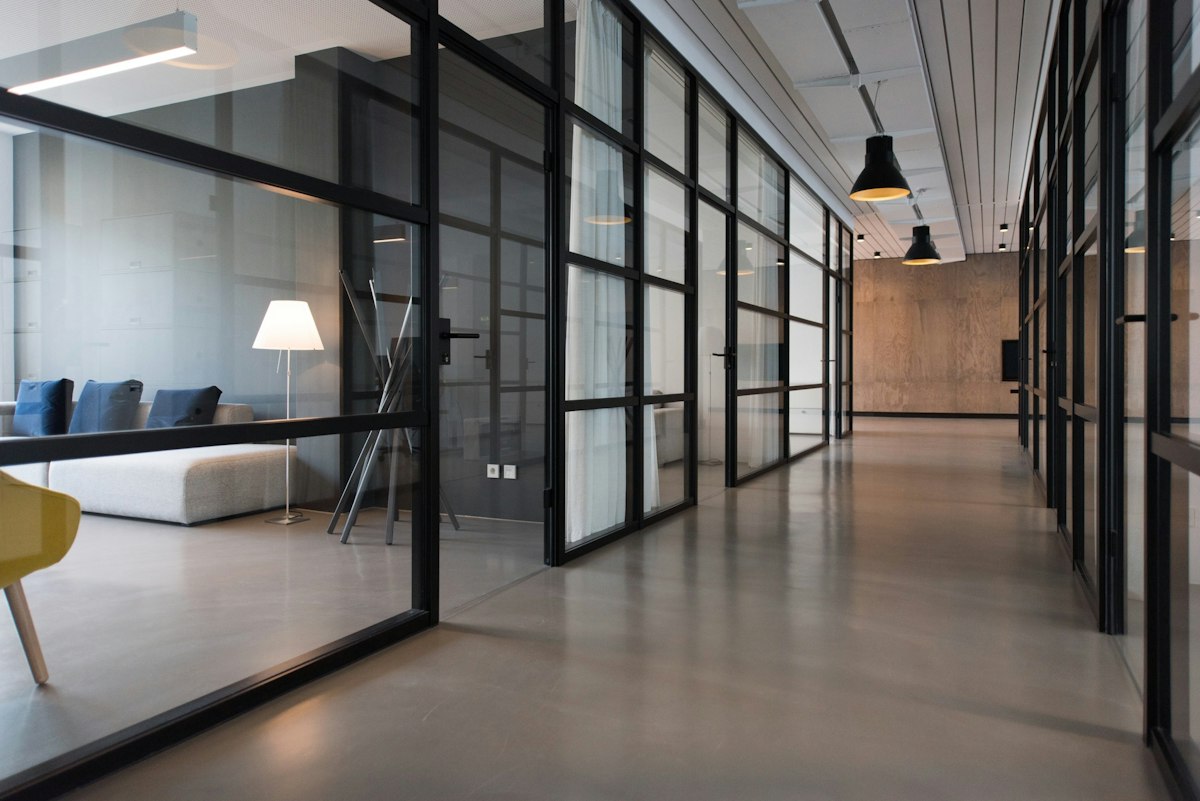
Private office space on flexible terms gives a full team infrastructure, confidentiality for sensitive work, and room to expand as headcount grows. At St. John’s Innovation Centre, office space operates on renewable leases with short notice periods after an initial three-month tenancy, which means space can grow alongside the company without penalty. The office range runs from 140 to 2,500 square feet across 95 units, all on all-inclusive pricing.
“What we hear consistently from founders who move into flexible space is that they wish they had done it sooner. The ability to right-size at each stage of growth, without the overhead of a lease negotiation every time the team changes shape, is genuinely liberating for an early-stage business.”
Stepanie Martlew, Chief Operating Officer, St. John’s Innovation Centre
Why Cambridge Is a Particular Case
Cambridge office space carries a premium. The city’s position at the centre of the UK’s most productive technology cluster drives demand from established companies and early-stage firms alike. Cambridge Science Park and the surrounding area house over 5,000 technology and life sciences companies. Competition for space is consistent.
That scarcity makes flexibility more valuable, not less. Founders who can access high-quality workspace in North Cambridge without committing to a three-year term gain both the credibility of a Cambridge address and the freedom to adjust as the company changes. SJIC sits within St John’s Innovation Park on Cowley Road, Cambridge CB4 0WS, close to junction 33 of the A14 and within cycling distance of the city centre. For companies relocating from London or internationally, it provides access to the Cambridge innovation community without the commitment and risk of a conventional lease.
What Comes With the Office Beyond the Lease
The strongest argument for flexible workspace in an innovation centre is not the lease structure. It is the access that comes with it. At SJIC, tenants can draw on tailored business support including one-to-one sessions with growth specialists, support accessing Innovate UK funding, connections to the Enterprise Europe Network, and introductions to investors and commercial partners across the Cambridge Cluster.
That combination, office space plus active business support, is why the five-year survival rate for companies at SJIC sits above 88 per cent, compared with the national average of around 45 per cent for UK businesses of comparable age. The informal connections that come from sharing a building with other founders, across technology, life sciences, cleantech, and professional services, are harder to quantify than a lease term, but experienced founders consistently rate them among the most valuable parts of being in an innovation centre.
“The companies that grow fastest here are the ones who treat the workspace as part of their strategy, not just an overhead. The access to expertise, the community, the Cambridge University network: these are assets that simply do not come with a conventional office lease, wherever it is.”
Stepanie Martlew, Chief Operating Officer, St. John’s Innovation Centre
Short-term office leases are not a compromise for companies that cannot afford traditional space. They are a rational choice for founders who understand that capital preservation and operational flexibility matter more at the early stage than the prestige of a long commitment. To find out what is available and whether it fits the current stage, get in touch with the team at St. John’s Innovation Centre.