
A Cambridge innovation with global impact
Every year, around 150 million tonnes of plastic packaging are produced globally, yet only around 10% is recycled. The remainder is incinerated, sent to landfill or leaks into the natural environment, contributing to one of the world’s most pressing environmental challenges.
At the same time, industries ranging from food packaging to consumer goods are under growing pressure to reduce waste, lower carbon emissions and move towards more sustainable materials. Paper and moulded fibre alternatives offer huge promise, but until now they have struggled to match the barrier performance of plastic.
Cambridge-based Archipelago Technology has found a scalable solution.
Based at St John’s Innovation Centre, Archipelago has developed Powerdrop™, a breakthrough coating technology that gives paper and moulded fibre the protective qualities of plastic while retaining the sustainability and recyclability benefits of fibre-based materials.
The technology is now helping manufacturers explore a future where packaging performs like plastic, without relying on plastic.
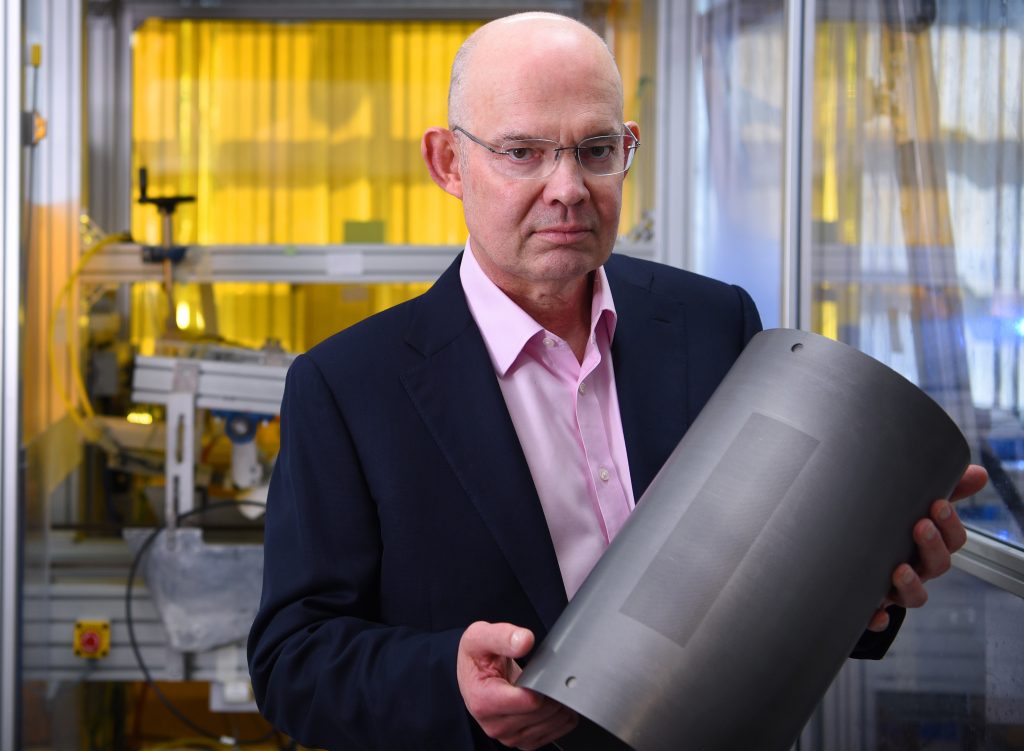
Tech platform designed for sustainable manufacturing
Archipelago’s proprietary Powerdrop™ system applies ultra-precise coatings to paper, moulded fibre and other sustainable materials including sugarcane waste, seaweed and wood pulp.
The result is packaging that can resist moisture, oils and gases while remaining recyclable and significantly reducing material waste during production.
Unlike traditional coating methods, Powerdrop™ operates like an industrial-scale “inkjet for coatings”, enabling highly targeted application with minimal waste and lower energy consumption.
For CEO Guy Newcombe, the mission is about combining deep technology with practical industrial impact: “My passion is to use technical, entrepreneurial and leadership skills to create positive impact in the world.”
Guy has worked in inkjet and advanced manufacturing technologies for more than 30 years, developing innovations across piezo, electrostatic and continuous inkjet systems before founding Archipelago.
Today, the company sits at the centre of a growing global movement to replace plastic packaging with more sustainable coated paper and fibre solutions.
From ideas business to engineering company
Like many ambitious Cambridge startups, Archipelago’s journey began with a strong technology concept but required support to scale commercially.
That support came through a combination of St John’s Innovation Centre, Innovate UK Business Growth and wider innovation ecosystem programmes.
Innovate UK Business Growth supported Archipelago with growth strategy, investment readiness, IP development and funding strategy, while additional support came through an Investor Partnerships grant and a Knowledge Transfer Partnership (KTP).
The result was transformational. Archipelago secured £1.5 million in combined grant and investment funding, created new jobs and expanded its engineering capability.
“We got a £600,000 grant linked with a £900,000 investment from the Low Carbon Innovation Fund, along with other investors,” says Guy. “That secured five jobs, enabled us to create another six, and we’ll continue growing the team.”
Why St John’s Innovation Centre matters
For Archipelago, being based at St John’s Innovation Centre has been about far more than office space.
“St John’s is a great place to centre a high-performing business,” says Guy. “There’s a buzz around the place. You feel the energy.”
One of the major benefits has been access to experienced advisers and mentors embedded within the Centre itself.
Richard Carey-Evans, Innovation & Growth Specialist, St John’s Innovation Centre, has worked closely with Archipelago throughout its growth journey: “Guy can walk in anytime and talk to myself or any of the team about the challenges he’s facing,” says Richard. “That continuity and accessibility is incredibly important for growing businesses. A large part of the work we did together focused on growth strategy, developing their IP position and building a clear funding strategy.”
“Richard and I work in the same building, that means we see each other every day,” adds Guy. “Richard’s deeply committed to Archipelago being a success. He’s teaching me particular tools for ensuring we stay on target.”
This kind of hands-on support is part of what has made St John’s Innovation Centre a key part of the Cambridge innovation ecosystem for nearly 40 years.
Building the next generation of innovators
Archipelago is also committed to investing in future talent. More than half of the company’s team is under the age of 30, and the business actively supports young scientists and engineers through undergraduate projects, postgraduate placements, paid summer internships, Year in Industry schemes, Knowledge Transfer Partnerships and graduate employment opportunities.
By the end of this summer, more than 40 young people will have worked with Archipelago through one of these programmes.
The approach fits both the company’s ambitions and the Cambridge Cluster mindset – a place where research, education, and entrepreneurship sit side by side, and where helping others along the way is just part of how things get done.
And from its base at St John’s Innovation Centre, Archipelago is proving that globally significant innovation can start with a strong idea, the right support network and a willingness to tackle difficult problems head on.
Guy says: “St John’s Innovation Centre has worked with us from being a small ideas business to being a real engineering company. Together, that’s transformed the way Archipelago works and delivers to its customers.”
To find out more about Archipelago Technology, visit:
Archipelago Technology
To contact the team:
connect@archipelagotechnology.com
Listen to the podcast:
Beyond Plastic: How Archipelago is Revolutionising Packaging